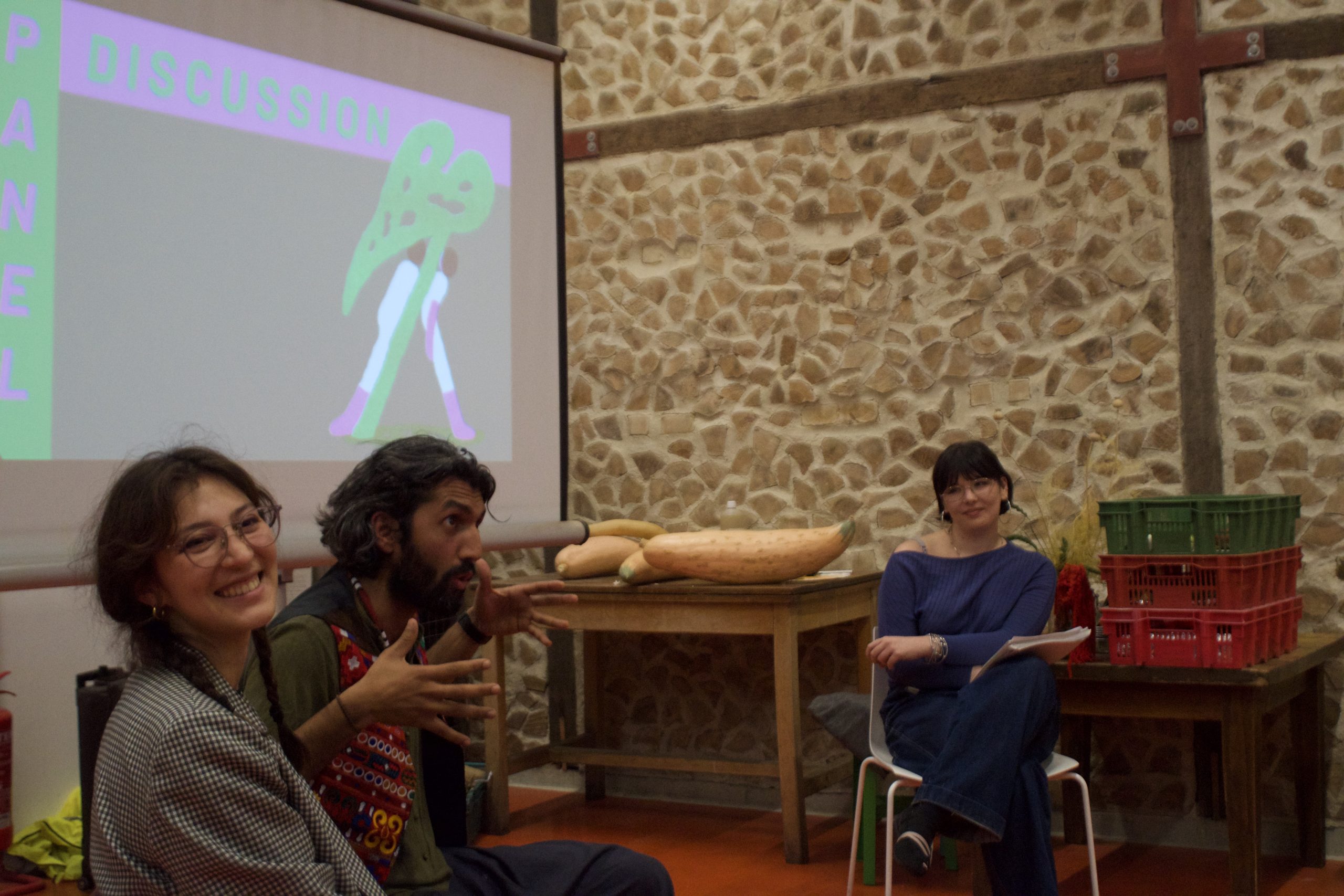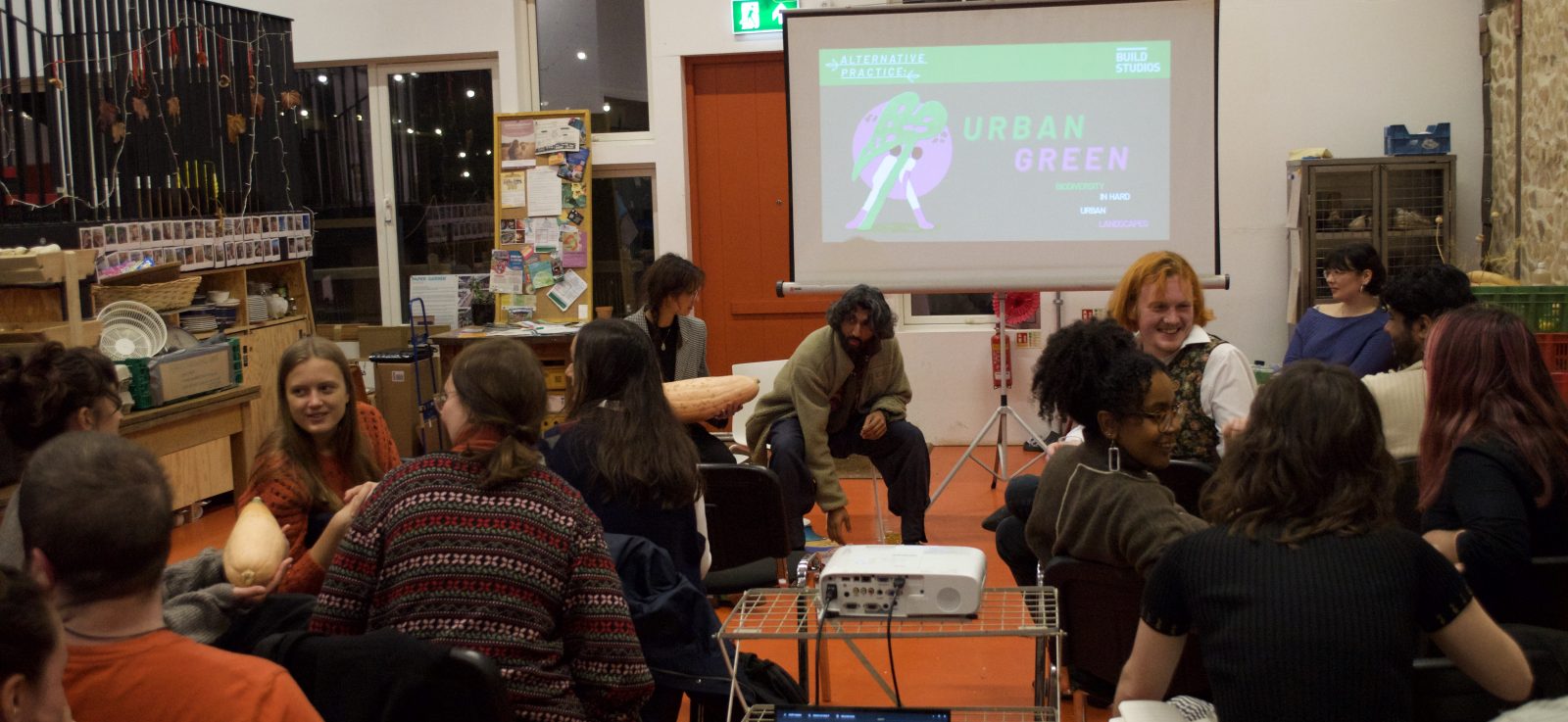
This October, with food, drink and green thumbs at the ready, students and young workers gathered once again for the fifth Alternative Practice. This time we explored all things urban greening and youth engagement, a topic that feels more vital than ever in an age of climate urgency and growing disconnection from nature.
The session delved into the importance of biodiversity in our cities and how young people are reimagining the built environment to be more sustainable, inclusive, and green.
Setting the Scene
We heard from speakers working across the built environment sector, all who shared the same drive for youth-led engagement in green spaces in our local communities.
Our chair, Lily Linke, Engagement Coordinator at the Frontiers Planet Prize and Youth Board member at the London Wildlife Trust opened the evening with reflections on the role of young people in shaping the built environment which lead nicely into our first speaker’s presentation on ownership and who green space is made for in our cities.
Shared Ownership at The Paper Garden
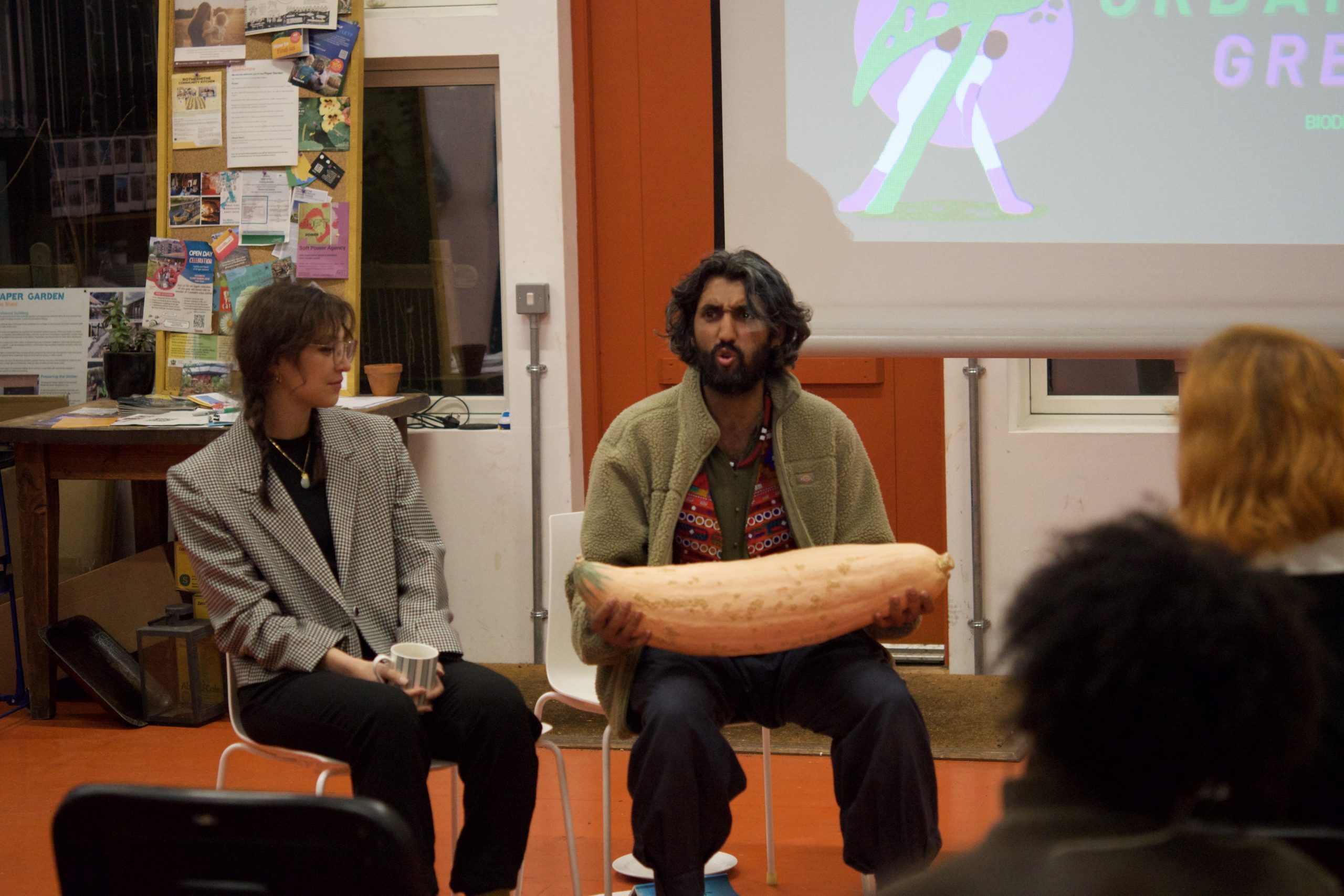
Our first speaker, Hasan Suida, Senior Youth Programmes Coordinator at The Paper Garden, invited attendees to pause and take in their surroundings. Urban Green’s event venue – a former paper storage shed for the Daily Mail’s printing office – has been transformed into a vibrant community greenspace in Canada Water.
As Hasan explained, The Paper Garden is more than a garden; it’s a living classroom, co-created by the young people who use it. His talk explored spatial awareness, sensory experience, and shared ownership, emphasising how hands-on involvement in shaping a space builds connection and pride.
For the youth groups who spend time here, The Paper Garden is participatory learning in its truest form. Where many classrooms require students to go to green space, here, they simply step outside the door.
After the event, we asked Hasan a follow-up question: In an increasingly digital age, how can we meaningfully engage younger generations – and encourage them to physically participate in spaces like this (Paper Garden) – especially when one in five children in London have no access to a garden, and screen time continues to rise?
Hasan: Whenever I get worried about the future, I come back to this quote from author Robin Wall Kimmerer “Even a wounded world is feeding us. Even a wounded world holds us, giving us moments of wonder and joy. I choose joy over despair. Not because I have my head in the sand, but because joy is what the earth gives me daily and I must return the gift.”
In response to your question, I choose joy over despair when I think about how young people interact with each other, the screens and nature-spaces. This year, running the youth programme at the Paper Garden for Global Generation, I took a dozen young people to summer camp with no access to their phones or signal. I learned two things. One, after initial withdrawal symptoms, the young people easily forgot their screens and meaningfully participated in the creative activities. Two, the elements they missed are the same elements I missed, digital communication, access to culture, creativity and films and friendships. With this, I see two co-existent answers to the question.
Firstly, we can meaningfully engage young people by taking them to green spaces and facilitating embodiment practices, nature connection, teamwork activities and crafts together. We just need an excuse to have fun and connect and the deep presence that can be achieved is healing in a subtle, but radical way.
Secondly, we can embrace the powerful, positive benefits of technology with intentional usage and co-production, from applying tech to solve problems that enhance the garden to using creative tools to enhance our connection to the landscape. For example, I ran a participatory video project with young people using a shared framework that we designed to ground, observe nature without our phones, design a story and then intentionally go out and film what we observed with our phones. The reflective writing and feedback process at the end revealed that young people enjoyed the act of choosing what to film and when to use their screens rather than feeling like they had to film the concert or share a picture with their friend. In other words, they came back into a relationship with their phones and found joy in the process.
Let’s bring young people into the gift of green spaces and let’s co-produce activities that embrace the digital age in a way that improves our relationship to each other and the world around us.
Listening, Not Just Doing at Hubbub
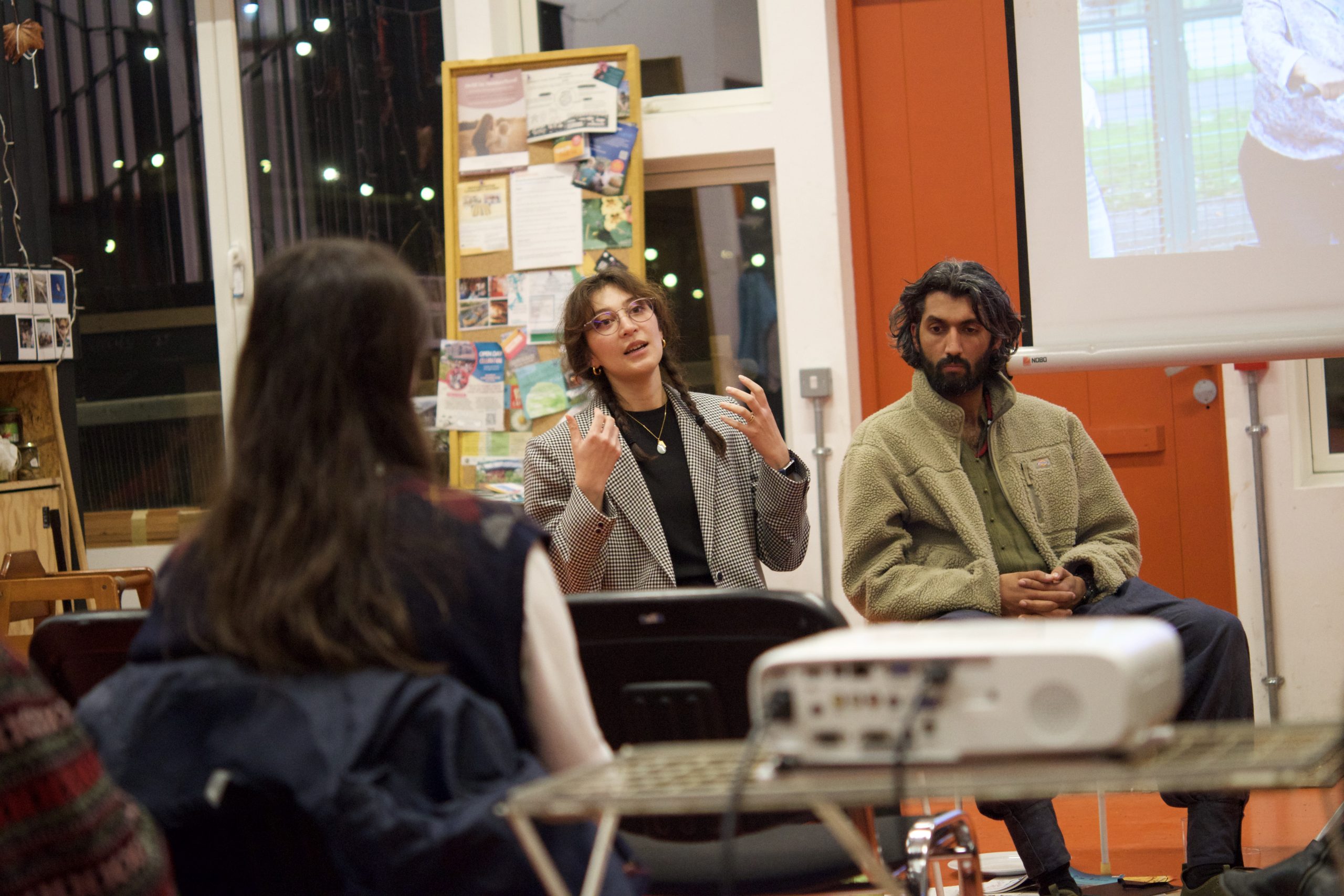
Next, Holly Smith, Creative Partner at Hubbub, shared insights from her work at the environmental charity known for making sustainability second nature. Hubbub brings together businesses, local authorities and communities to co-create campaigns that make sustainable living both accessible and appealing.
Holly spoke about projects that reconnect local communities with their environment, highlighting the importance of genuine, long-term engagement. In many communities, she noted, how you show up matters as much as what you bring. Sustainable change begins by listening and not by arriving with a ready-made agenda.
Too often, she said, new initiatives arrive with spectacle but little listening. People come to do, rather than to hear. True engagement means understanding the values and needs of those who live in and care for a place. Because, as Holly reminded us, access to green space is universal, our connection to nature cuts across divisions, it’s something that unites us.
After the event, we also asked Holly a follow-up question: How can circular economy principles be embedded into the way cities plan and maintain green spaces? What barriers do you see to making this mainstream?
Holly: I find the question really entertaining, because thriving green spaces will inherently have a ‘circular economy’, In nature, there is no such thing as waste. Everything that falls or dies becomes a resource for other organisms. Autumn leaves feed the soil, insects feed the birds, fungi and bacteria recycle what we might call debris into nourishment. Over millennia, natural systems have perfected circularity and found ways to use up every available resource.
Historically, human towns have grown and evolved to centre trade and commerce rather than ecology. From medieval marketplaces to modern shopping centres, our public spaces now revolve around buying and selling. Today, many urban gathering places or ‘third spaces’ are commercial by design. This creates a cultural and structural barrier to circular thinking: we’ve normalised the idea that social life revolves around consumption rather than connection
When we do create green spaces in cities, too often they’ve been treated as a decorative after thought rather than living systems. Trees are planted in boxes that limit their growth. Shrubs are placed in compacted soil with no room for roots. Ground is paved or astro-turfed over, offering no routes for water to soak away and be stored. When these plants fail to survive, people assume that greenery simply can’t survive in dense cities. But in truth, it’s our design choices that fail the plants. Urban designers must recognise and plan for green spaces to expand and twist and shed and branch.
There’s also a deeper ecological disconnect in how we build. In healthy ecosystems, trees and plants are not isolated; their roots connect through mycorrhizal networks that allow them to share nutrients and communicate chemically. In cities, impermeable paving and artificial boundaries sever these networks. By doing so, we cut ourselves off from the resilience that nature relies on. At the same time, we cover the soil needed for many insects and pollinators to nest and thrive.
Access to green space is another issue that highlights inequality in our cities. Some communities enjoy vast, leafy gardens and tree-lined streets, while others have barely any green space at all. In London, for example, the Campaign to Protect Rural England shows that London has only half the green space it needs for a population of its size. When access is unequal, participation in circular initiatives is unequal too. People can’t be expected to protect or care for systems they’re excluded from.
So, what does embedding circular economy principles into city planning actually look like? I think it starts with creating public spaces that are not driven by commercial intent. Places where people can meet, rest, and learn without the expectation of spending money. It means investing in nature reserves, repair workshops, tool libraries, creative spaces and skill-sharing networks that extend the life of materials and strengthen community ties. These spaces make circularity tangible – not as an abstract policy, but as a lived experience.
Community gardens, like the Paper Garden in Canada Water, are incredible examples of this in action. To steal Global Generation’s bio for the Paper Garden: local primary school children, families, young people and businesses have been transforming the site, reusing the site’s original materials wherever possible and co-creating abundant growing spaces. The Paper Garden’s classroom proves the circular economy can work: railway sleepers make up the walls and old fire doors make up the floor. In community gardens across the country, food scraps become compost, compost feeds soil, and soil grows new life. And just as importantly, these gardens rebuild relationships between people and place, as reused materials innately come with their own stories and memories.
So, what can people do to help embed circularity and increase green space where they are? Go to local community gardens, take part in rewilding projects, support nooks of nature in the interstitial urban spaces where it’s learned to survive. To make circular thinking mainstream, we have to recognise that this is not only a design challenge but a cultural one. Organise community events and gather in ways that don’t revolve around consumption. It’s about moving from consumption to collaboration. Cities have always been centres of human innovation. I hope we can apply that creativity to shape our cities as living systems have, where nothing is wasted and everything connects.
A Stroll Through the Garden
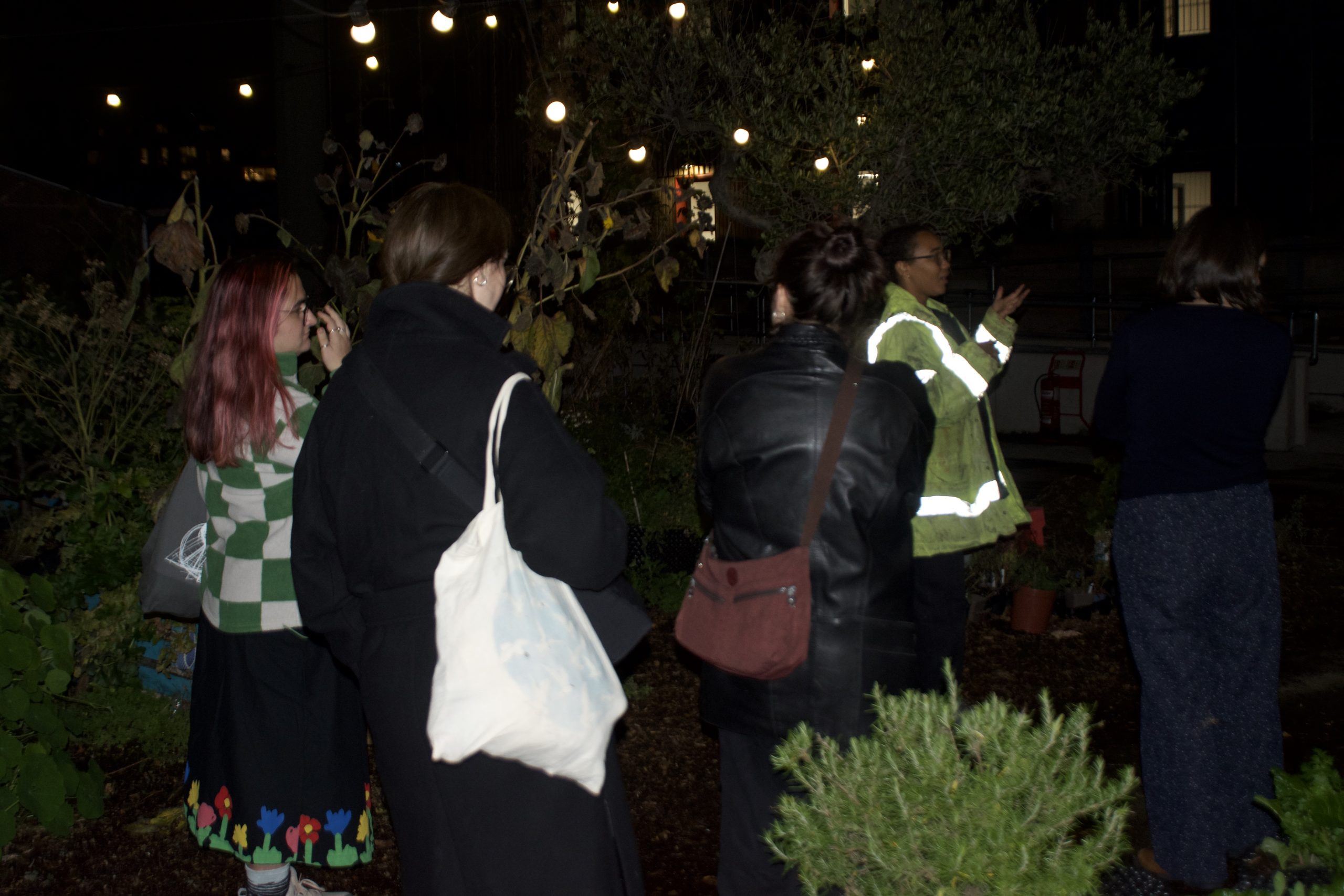
The evening closed with a guided walk through The Paper Garden, led by Jillian Linton, Events and Communities Manager at Global Generation. Among vegetable beds, wild plants, and even a few resident chickens, we saw first-hand how the principles discussed throughout the night are embedded in the space itself. The garden is living proof of what happens when young people are trusted to lead when curating urban green space.
 Thank you!
A huge thank you to our chair and speakers and to all who braved the weather to enjoy the event with us! And a special thank you to our wonderful hosts at Global Generation for sharing The Paper Garden and its story with us!